


The Screenshot That Cost $4.8 Million
Imagine uploading a photo and then finding out it cost you $4.8 million.
This nightmare scenario actually happened in South Korea, and it offers an important lesson about cybersecurity.
If we don’t keep up with how things work, even a small mistake can become very expensive.
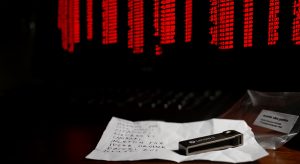
On February 26, 2026, South Korea’s National Tax Service shared a press photo from a cryptocurrency investigation. The image showed a seized Ledger hardware wallet on a desk, with a sheet of paper next to it.
Just minutes later, all the funds were gone.
The paper had a seed phrase, twelve simple words that act as the master key to a crypto wallet. Whoever has those words controls the money. An attacker noticed the phrase in the photo, sent a small amount of ETH for gas fees, and emptied the wallet in three quick transactions.
There was no security breach, no malware, and no technical hack.
Someone just didn’t realize what they were seeing.
At first, this mistake might seem surprising.
But it actually reveals a common problem in today’s workplaces: many of the most valuable digital assets don’t look valuable at all.
Assets That Don’t Look Valuable
This incident highlights a bigger issue in security. People often have trouble seeing value when it’s just a string of text.
A house key looks important. A wallet looks important. But twelve random words on paper don’t seem valuable.
We tend to see these as just information, not as assets. But in the digital world, text can be the asset. A seed phrase, API key, or token can give direct access to systems and money.
Modern workplaces are full of these hidden keys: API credentials, SaaS tokens, SSH keys, AI service accounts, and configuration secrets. Computers see them as access controls, but to people, they often just look like harmless strings.
This difference creates risk.
How Most Exposures Actually Happen
Credential leaks rarely come from advanced attacks. Most happen during everyday work.
It could be pasting a token into an AI prompt, sending a screenshot via Whatsapp, or uploading a photo from the office to social media revealing a password note.
These actions feel routine. The information shared often looks technical but harmless. But hidden in those files could be the digital equivalent of master keys.
The Korean tax agency case just condensed this whole pattern into one photo.
The Real Awareness Problem
Security training often teaches us to recognize things like passwords, phishing emails, or suspicious attachments.
But today’s credentials don’t always look familiar. A seed phrase doesn’t look like a password. An API key might be hidden in a configuration file. A token could show up in a log entry.
The real problem is behavior. People often share information without thinking about what’s inside.
People take screenshots quickly, forward files without checking them, and copy messages into tickets without much thought. Modern work moves fast and often values action over careful review.
The Habit That Matters
The best security habit is simple: pause before you share anything.
Pause before sending a screenshot, forwarding a file, or pasting logs into chat.
Ask yourself: What am I about to share, and who will see it?
Security awareness is less about spotting credentials and more about learning to pause. In today’s systems, the most valuable assets often look like random text.
Sometimes, those assets are just twelve ordinary words worth $4.8 million.
Twelve Words, $4.8 Million
The Korean tax agency didn’t lose $4.8 million because cryptography failed or hackers found a clever exploit. They lost it because twelve ordinary words didn’t seem important.
This is the main paradox in digital security: the keys to money, infrastructure, and data rarely look like keys.
This is a lesson we all need to learn—and soon.
Until organizations teach people to treat information as carefully as they would physical keys, the next multimillion-dollar breach could already be waiting in someone’s screenshot folder.
Is your organization doing enough to fix this common weakness?
This article was written by Cywareness, a company specializing in cybersecurity awareness.
As part of its mission, Cywareness continues to monitor emerging trends, analyze real-world attacks, and share practical insights to help organizations stay ahead in today’s evolving threat landscape.