

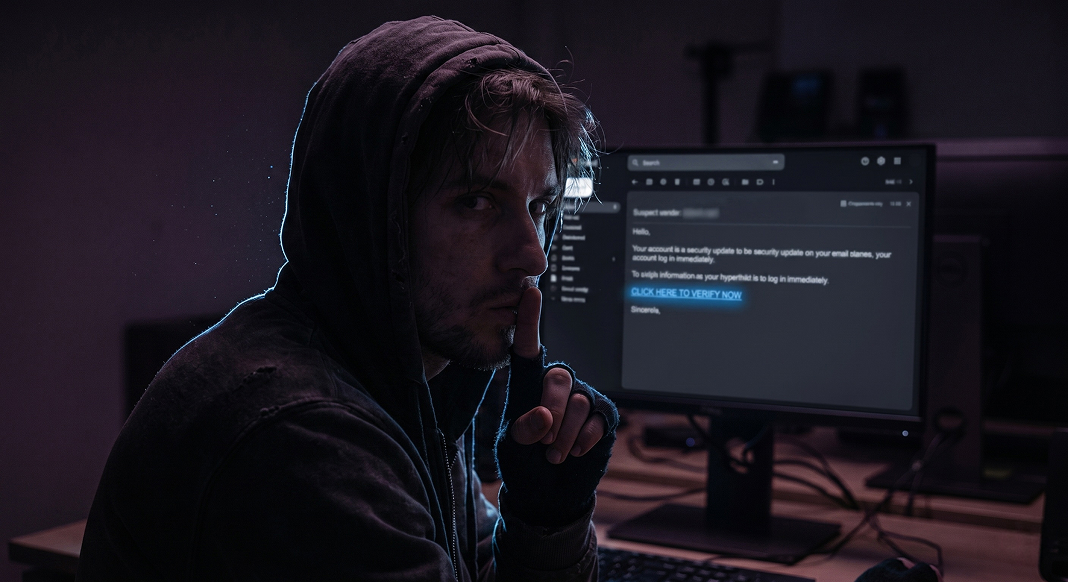
Sshhh! Why Hackers Demand Silence in the Workplace
The truth is, when it comes to phishing, hackers don’t demand silence. They don’t need to. They know we’ll do it anyway.
When a click goes unreported, the security team cannot see it, let alone respond. Usually, the click is not the real problem; it is the silence that follows. And that silence is spreading.
The infuriating part is that none of it is the attacker’s doing.
There is no version of events where punishing the reporter helps: the click is the mistake, the report is the repair. Yet all too often, the person who owns up is met with irritation, blame, or in some cases even humiliation. With the rest of the workforce watching and learning, silence becomes a self-inflicted wound, created over time by a culture of shame and fear.
Why people go quiet
From the employee’s point of view, staying silent can seem like the smart choice. They think that keeping quiet will protect them and that being anonymous is safer. If nobody knows, they feel there is nothing to worry about. The instinct is understandable, but completely wrong.
Wanting to keep a mistake to yourself is deeply human; almost anyone, caught out, would feel the same pull to make it quietly disappear. That reaction, though, is exactly what the attack relies on. The whole campaign is a bet that the person who clicked will be too embarrassed to speak up, so that, without ever meaning to, the victim covers the intruder’s tracks.
To make matters worse, time is critical. Today’s attacks can go from a small problem to a major breach in days, not the weeks of folklore, and every hour of silence gives the attacker more room. Telling someone early is the best way for employees to protect themselves and the company.
But knowing the smart move and feeling safe enough to make it are not the same thing.
You cannot expect someone to be brave inside a culture that punishes bravery, and one person alone cannot change it. The organization has to.

The cultures that win
Research makes this clear. Amy Edmondson, a Harvard professor who studies psychological safety, found that the best teams are not those with the most talent or the fewest mistakes. They are the ones where people feel safe enough to admit mistakes and ask tough questions. That kind of safety helps teams spot problems faster and learn from them.
The organizations that win at security build a culture where people feel safe: safe to say “I think I clicked something,” to flag the email that looks off, to be wrong out loud. They hear about trouble sooner, more often, and more honestly.
That is the proof: a safe culture is no soft extra but a hard advantage, one that cannot be bought and does more to protect your data than any product on the market.
Kill the silence
This does not mean ignoring mistakes. You still warn people away from suspicious links, you still train them, and you still set clear standards, because fewer mistakes are always better. But the mistake is not the enemy. The silence is.
You kill the silence by building a culture where people are not afraid. Make it easy to report a mistake without fear of punishment, so coming forward beats hiding. Thank the people who own up instead of blaming them; the reaction they get teaches everyone else what to expect. Do not punish the same mistake twice, since the dread of making it is punishment enough. Punish honesty, and you will not get fewer mistakes. You will just stop hearing about them.
The order matters. First you make it safe to speak; only then does silence die for good. No workforce will ever stop making mistakes, and chasing a faultless one is naive. The winnable goal is a workforce with no reason to stay quiet, people who tell you the moment something goes wrong, while there is still time to act.
A report is not a sign your culture has failed. It is the sound of it working.
This article was written by Cywareness, a company specializing in cybersecurity awareness.
As part of its mission, Cywareness continues to monitor emerging trends, analyze real-world attacks, and share practical insights to help organizations stay ahead in today’s evolving threat landscape.